
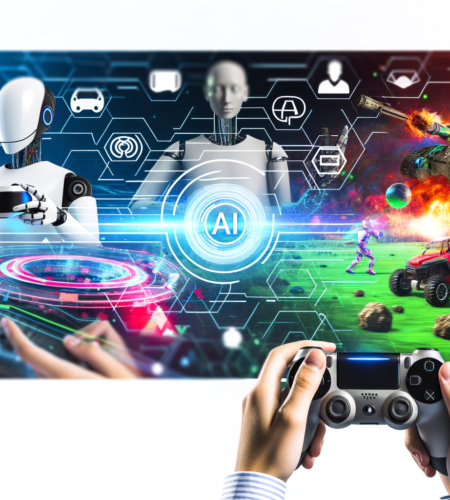
AI Revolution: Embracing the Future of Technology
The landscape of technology is evolving at an unprecedented rate, and at the forefront of this evolution is Artificial Intelligence (AI). From mundane tasks to complex problem-solving, AI is transforming every aspect of our lives and industries. Are you ready to explore how this AI revolution is shaping our world? Let’s dive in!
Introduction
Artificial Intelligence isn't just a buzzword anymore; it's a game-changer. Over the past few years, we've witnessed breathtaking advancements that have pushed AI from the realm of science fiction into our everyday lives. From algorithms that sift through mountains of data in seconds to chatbots that can mimic human conversation with surprising finesse, AI is weaving itself into the fabric of how we live and work.
Why does this matter? Because the implications are enormous. Whether it's Smart Home devices making our lives more convenient or AI tools enhancing medical diagnostics, the efficiency and accuracy of these technologies are reshaping entire industries. But this rapid development invites a conversation about what it all means for the future. AI is not just an accessory in our digital toolkit; it's a central player in the ongoing evolution of technology—and by extension, society itself.
In this article, we’re diving deep into the world of AI. We’ll explore its components, its impact across various sectors, and the accompanying challenges that we need to navigate. So, buckle up; we're about to embark on a journey through the AI revolution.
Understanding AI and Its Components
Artificial Intelligence, or AI, is often a buzzword tossed around in conversation and advertising, but it’s essential to break it down into manageable pieces to truly grasp its implications. At its core, AI refers to the simulation of human intelligence in machines that are programmed to think and learn like humans. It encompasses a range of applications, including AI automation—where repetitive tasks are executed by machines—and AI agents that can operate autonomously to perform specific functions.
AI comes in different flavors, primarily categorized into narrow and general AI. Narrow AI focuses on specific tasks, like recommending your next movie on Netflix or diagnosing a medical issue based on symptoms. These systems excel at doing a limited set of tasks but lack general understanding or reasoning. On the other hand, general AI, which is still largely theoretical, would be capable of performing any intellectual task a human can do, possessing understanding and reasoning similar to our own.
The components of AI work together harmoniously to create intelligent systems. Machine learning, a subset of AI, involves training algorithms on data to help them make predictions or decisions without explicit programming. Natural language processing enables machines to understand and respond to human language, while computer vision allows systems to interpret and understand visual information. These technological threads are woven together to form smart systems that can learn, adapt, and eventually serve in ways we are just beginning to explore.
In essence, understanding these core components of AI and how they interact is crucial. The advancements we enjoy daily—like smarter smartphones, effective virtual assistants, and intuitive software—are built on these principles. As we stand on the brink of this technological frontier, grasping AI’s fundamentals will prepare us to engage with the innovations on the horizon.
The Impact of AI on Industries
AI is not just a buzzword; it's a game changer across various sectors—and its impact is profound. Let’s take a closer look at how this technology is redefining some key industries.
Healthcare
In healthcare, AI's transformative capabilities are evident in enhanced diagnostics and patient care. Machine learning algorithms can analyze vast amounts of medical data, predicting outcomes and aiding in early disease detection. For instance, AI-powered tools are being used in radiology to identify tumors more accurately than the human eye. Additionally, AI chatbots are improving patient engagement, providing instant answers to common queries, and streamlining the scheduling process.
Finance
When it comes to finance, AI's utility shines through in fraud detection and automated trading. Financial institutions employ AI systems to scan transactions in real-time, flagging suspicious activity more efficiently than conventional methods. On the trading floor, algorithms analyze market trends and execute trades within milliseconds, often outperforming human traders. This agility not only increases profits but also stabilizes market behavior by reducing volatility.
Manufacturing
In the manufacturing sector, AI is bringing about a new wave of efficiency through automation. Intelligent robots handle repetitive tasks with precision, reducing human error and increasing output. Predictive maintenance powered by AI analyzes equipment data to anticipate failures before they happen, cutting down on costly downtimes. Companies like Siemens and Tesla are adopting these technologies to streamline their operations and enhance productivity.
Transportation
Transport is another industry where AI is making a significant mark. Self-driving vehicles, once a futuristic dream, are becoming a reality. AI systems in these vehicles process real-time data from sensors, making decisions that ensure safe and efficient travel. Moreover, AI is optimizing traffic management systems, reducing congestion, and improving public transportation schedules through data analysis, leading to shorter commutes and lower emissions.
In essence, AI is not just enhancing these industries; it’s paving the way for entirely new business models and efficiencies. As we continue to leverage this technology, the possibilities for innovation are boundless.
The Role of AI Automation
AI automation refers to the use of artificial intelligence to perform tasks without human intervention, streamlining processes and enhancing efficiency for businesses. The benefits are clear: increased productivity, reduced operational costs, and the freedom to redirect human talent toward more complex and creative challenges.
In the realm of customer service, chatbots have become ubiquitous. These AI-driven tools handle inquiries 24/7, providing instant responses to common questions and concerns. Brands like Sephora and H&M have successfully integrated chatbots into their service lines, allowing customers to seek assistance without waiting in long queues. This not only saves time but enhances customer satisfaction—who doesn't appreciate quick service?
Another great example is automated inventory management. Companies such as Amazon utilize AI to monitor stock levels and predict inventory needs. By analyzing purchasing patterns and trends, these systems ensure that products are replenished just in time, reducing waste and improving supply chain efficiency.
Let's take a closer look at a case study: a mid-sized retail company implemented an AI-driven chatbot to interact with customers online. Within months, they reported a 30% reduction in response time and a 25% increase in sales due to improved customer engagement. Another company in the automotive industry automated their inventory processes with AI, resulting in 15% lower operating costs and a significant decrease in stockouts.
These examples demonstrate that AI automation is not just a trend; it's a powerful tool reshaping the way businesses operate. Organizations embracing this technology are not only gaining a competitive edge but are also setting themselves up for a future where innovation and efficiency go hand in hand.
The Rise of AI Agents
AI agents are reshaping how we interact with technology by serving as sophisticated intermediaries between humans and machines. These intelligent software entities leverage vast amounts of data and advanced algorithms to perform tasks autonomously, learning from user interactions to improve their responses over time.
What is an AI Agent?
Think of an AI agent as a smart helper that carries out your wishes without needing you to hold its hand every step of the way.
Common Examples of AI Agents
- Personal Assistants:
- Siri
- Alexa
These are perhaps the most recognizable examples of AI agents at work. With a simple voice command, you can:
- Set reminders,
- Control smart home devices, or
- Get information on almost anything.
Personalized Experiences
These agents learn your preferences and habits, allowing for a more personalized and efficient experience.
- For Example: Imagine asking a virtual assistant to play your favorite song while you cook dinner; this has become second nature in many households.
AI Agents in Business
But AI agents aren't limited to the home front. In business environments, their potential is nothing short of game-changing.
Decision-Making Support
- Utilization: Decision-making support systems utilize AI agents to analyze data and offer insights that help companies make informed strategic choices.
- Scenario: Picture a sales team equipped with an AI agent that forecasts customer behavior, identifies trends, and suggests the best actions to take.
This capability:
- Streamlines processes,
- Empowers organizations to be agile and responsive in a fast-paced market.
Future of AI Agents
As AI agents continue to evolve, they will play an increasingly integral role in various sectors. Their ability to handle complex tasks with efficiency means they can free up human resources for higher-level strategic work.
New Possibilities Unfold
This shift opens up new possibilities for innovation and productivity that we are just beginning to scratch the surface of.
Conclusion
In short, AI agents are more than just tools; they’re becoming essential partners in both our personal and professional lives.
Ethical Considerations and Challenges
As we ride the wave of AI innovation, it’s crucial to pause and consider the ethical landscape surrounding this technology. AI isn’t just about automation and efficiency; it brings with it a slew of ethical concerns that we can’t afford to ignore.
One major issue is job displacement. While AI can significantly enhance productivity, it often does so at the cost of human jobs. Automation can take over repetitive tasks, which might seem like a win for businesses, but it leads to a real concern for workers who find themselves out of a job. The solution lies in re-skilling and up-skilling programs, enabling employees to transition into more complex roles that AI cannot easily replicate. It’s a tough conversation, but one that companies and governments must lead.
Privacy is another hot-button topic. With AI systems gathering vast amounts of data to learn and improve, where do we draw the line? Personal information, if mishandled, can lead to breaches of privacy and trust. Strong regulations are necessary to protect individuals, holding tech companies accountable for the data they collect and how they use it.
Finally, there’s the challenge of bias. AI systems learn from data, and if that data is biased, the outcomes will reflect those biases. This can perpetuate existing inequalities in society, affecting everything from hiring practices to law enforcement. It’s essential to advocate for transparency in AI algorithms and ensure diverse datasets to create fair and equitable AI solutions.
Navigating these ethical considerations will require collaboration among technologists, policymakers, and the public. Only by addressing these concerns head-on can we harness the full potential of AI while safeguarding our values and social structures.
Looking Ahead: The Future of AI
As we peer into the crystal ball of technology, the future of AI looks promising and full of possibilities. We’re on the brink of developments that could redefine not just what machines can do, but also how we interact with them. Picture this: vast improvements in general AI, where machines might not only perform tasks but also understand context, learn from experiences, and make creative decisions.
Additionally, the integration of quantum computing with AI could leave our current capabilities in the dust. Imagine AI that can process vast datasets instantaneously, handling complex problems that were once thought insurmountable. The implications for fields like climate science, medicine, and social dynamics are staggering.
For those intrigued by the nuances and potential of AI’s future, I recommend checking out Wait But Why. They dive deeper into the evolutionary trajectory of AI and offer perspectives that are both thought-provoking and enlightening. As we move forward, it's essential to stay tuned to these advancements, ensuring we're not just passive observers but active participants in the AI revolution.
Conclusion
As we stand on the brink of what could be the most significant technological transformation in history, the potential of AI is both exciting and daunting. The integration of AI into various fields has already changed the game—improving efficiencies, enhancing decision-making processes, and creating opportunities we couldn't have imagined a few years ago. However, this revolution is not without its challenges. Issues like ethical implications, job displacement, and privacy concerns loom large, reminding us that with great power comes great responsibility.
Embracing this future requires us to stay informed and engaged. Whether it's adapting to new technologies, advocating for ethical practices, or simply understanding how these advancements can enhance our daily lives, being part of the conversation is crucial. AI holds the promise of a better tomorrow, but it’s up to us to shape that future consciously. Are you ready to be a part of the AI revolution? Stay curious, stay aware, and let’s navigate this exciting frontier together.
Subscribe to our email newsletter to get the latest posts delivered right to your email.
Comments